Facebook is taking another bite of the outside Internet by turning its Instant Articles format into an open platform any publisher can use starting April 12th. Yet the question remains whether Instant Articles are good for publishers, or something detrimental they’ll have to adopt or be left behind.
Since the launch in May, Facebook had worked directly with partnered publishers to onboard them to the option that makes their sites load faster inside Facebook’s app rather than in a web browser. Now publishers will be able to configure Instant Articles themselves using Facebook’s documentation.


Instant Articles combines Facebook’s desire for a smoother user experience with a huge benefit to its business. The program effectively bars the exits from Facebook. Rather than forcing people to wait for web pages to slowly load which can lead to frustration and them closing the app or clicking away to another website after, Instant Articles keeps people inside Facebook’s garden where they see ads and connect with friends.
Facebook might have announced the expansion of Instant Articles today as Google is expected to launch its similar Accelerated Mobile Pages product in late February. However, they won’t be competitors, as publishers will be able to use Google’s more open-ended AMP program to speed up their pages for all visitors as well as using Instant Articles to drive a better experience for Facebook referral traffic.


Facebook’s Instant Article format on the left shows fewer traffic recirculation and subscription links than traditional pages on the right
But there’s still an open question about what the impact of Instant Articles is for publishers. Facebook significantly restricts how many ads publishers can show in Instant Articles. According to its policy, “Each ad must be separated by a minimum of 350 words. If your article consists primarily of images or media, ads must not exceed 15% of the content.” For some sites, that’s fewer ads than they’re accustomed to showing.
Meanwhile, the stripped down, sterilized design format can remove important links that help recirculate traffic to a publisher’s other posts, and that encourage people to pay for subscriptions, buy event tickets, or sign up for newsletters. The Wall Street Journal reports some publishers are now earning as much per click to an Instant Article as to a traditional page. But that doesn’t factor in the decreased likelihood of subsequent page views.
The 350 word/15% rule applies to these “house ads” that promote a publisher’s own content or monetization.
Essentially, while these publishers might see a higher percentage of people who click their links actually read their stories because they load faster, the publishers might get fewer secondary clicks or monetization opportunities. All in all, it’s good for the user, at least for now. But by weakening the relationship between publishers and readers, Facebook could hurt their ability to build the sustainable businesses that create the content we consume.











 Got a bicycle, motorbike or car? What about a Smartphone? That's all you need to make some extra money by delivering food or people whenever you've got some spare time.
 The key to success with eBooks is to create value, and write non-fiction. Simply bundling information you have researched and complied on a common problem (eg. ‘secrets' to finding a job) and then presenting it in an easy to digest format (an eBook) justifies someone spending a few quid on it.

 A part-time job is the obvious first choice, opted for by most students looking to supplement their student loan. It provides a pretty steady flow of income and can enable you to gain valuable work experience.
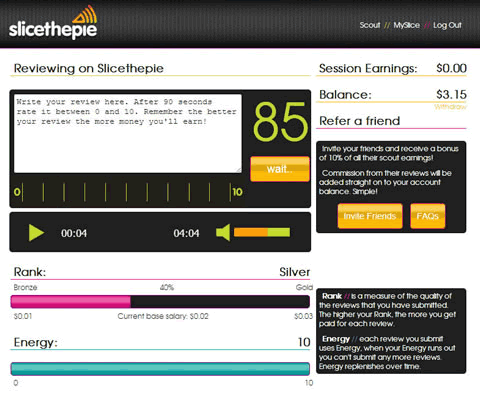
 If you don’t mind sharing your notes with other students it’s a great way to generate a little extra cash. There are sites out there that you can upload your notes to, along with your price, and then when another student downloads them you get paid.
 A domain name is just a website address (eg. ‘savethestudent.org' or ‘mysite.co.uk') and there are lots of extensions (.com, .net, .co.uk etc).
 Today becoming a mystery shopper is easier than you think and you can get rewarded handsomely.
 If you are looking to make a very quick buck, then selling your old bits and bobs that are cluttering up your room is a good idea.
 For one-to-one tutoring, list yourself on
  Some
Some 
 It's a classic money-maker, and for good reason. You get paid (well) to watch TV and not very much else!
 Directors for TV and film are always on the hunt for houses to film in. For instance, a scene for Coronation Streetwas recently filmed in the student house one of the Save the Student editors used to live in!
 According to
 We all know how much money there is in property, but on the surface (with house prices as high as they are) you might be thinking this market is off-limits.
